
Both Things Can Be True

He will start talking about space or nature or dinosaurs or superheroes or a video game world in the middle of a completely unrelated conversation.
Not casually, either. Fully. With detail. With enthusiasm. With the kind of intensity and certainty that makes you stop and listen, even if you weren’t planning to. You’re welcome.
And somewhere in the middle of all that explaining about how the world as we know it came to be or is or should be, he might start pacing. Back and forth. Or maybe in a circle. He might whistle between sentences if he’s real excited or agitated. And he might look you directly in the eyes while doing it.
If you met him like that, you probably wouldn’t think, autism.
That’s part of it.
The harder part - the part you don’t see in those moments - is that he knows when he’s being misunderstood.
He can feel it when someone reads him wrong. When they assume intention instead of overwhelm. When something he couldn’t quite control gets framed as something he should have.
And for a kid who feels things as deeply as he does, that doesn’t just roll off.
He is so quick to remind other people who they are. To build them up. To tell them they’re good, or capable, or brave. It comes naturally to him, the way breathing does.
But turning that same lens on himself? That’s harder.
Because when the world keeps reflecting back confusion or correction or frustration, it starts to get internalized. Quietly. Over time.
And somewhere in there, the kid who believes the best about everyone else starts to question if those same things could possibly be true about him.
My son is autistic. He also has ADHD. And most of the time, what that actually looks like doesn’t line up neatly with what people expect out of either.
He makes and maintains eye contact.
He’s incredibly empathetic.
He notices when someone is left out and will go out of his way to include them.
He gives the kind of verbal encouragement most adults struggle to articulate.
He is, quite literally, other people’s biggest cheerleader.
He also gets overwhelmed in loud, crowded spaces. Like the playground, the lunch room, parks or public events. Not in a super dramatic way - just a quiet shift at first. A tightening. A withdrawal. A little irritability. Sometimes later, at home, it spills out in ways that are bigger than the moment that caused it. It just truly depends on how overwhelming it was.
He has headphones that would help.
He doesn’t always wear them.
Because someone made fun of him once.
He struggles with impulsivity. With attention that swings from deep, almost beautiful focus into something harder to get a handle on. With emotions that come on strong and fast and take time to settle back down.
He is learning how to manage that. We are learning with him.
His stimming doesn’t look like what people expect, either. It’s pacing. It’s “normal” movement. It’s whistling mid-thought when his body is trying to regulate itself faster than his words can keep up. It’s chewing on things that probably shouldn’t be chewed on
It’s easy, I think, for people to believe they understand autism because they’ve seen a specific version of it.
There’s also a space he lives in that doesn’t get talked about enough - the in-between.
He’s bright. Articulate. Advanced in ways that make it easy to assume he’s fine.
He doesn’t meet the thresholds for certain supports, because on paper, he’s doing well enough.
But “well enough” is not the same as “not struggling.”
It just means the struggle is happening in places that are easier to miss.
So when something does surface - an impulsive reaction, an emotional outburst, a moment where regulation slips - he’s often met with correction instead of support.
Because it looks like something he should be able to control.
And he is trying. He’s working on it. Every day.
But there’s a difference between willful behavior and a nervous system still learning how to catch up.
And when that difference isn’t recognized, kids like him can quietly fall through the cracks - too capable to qualify for help, but still needing understanding in ways that aren’t always offered.
And when you add ADHD into the mix, it can look like contradiction.
He craves structure. He resists it.
He wants calm. His body won’t stay still.
He can focus for hours on something he loves and then struggle to hold attention for five minutes somewhere else.
Both things are true.
And then there’s the piece that’s harder to explain, but just as real - environment.
He moves between two homes that are not the same. Not in rhythm, not in expectation, not in how things are handled.
And while that’s a reality for a lot of kids, for a child who depends on predictability to feel regulated, those shifts can be bigger than they look from the outside.
Transitions take more energy. Adjustments take more effort. The internal recalibrating is constant.
So sometimes what shows up in one space isn’t just about that moment - it’s the accumulation of everything it took to move between them.
Consistency helps. Understanding helps.
But when those things aren’t always aligned, it can add another layer to a nervous system that is already working hard to find its footing.
What I’ve learned - what I am still learning - is that so much of what looks like behavior is actually regulation. So much of what looks like “he’s fine” is actually effort.
And so much of who he is has nothing to do with what he struggles with.
He loves superheroes. Not just because they’re cool, but because they stand for something. His favorite is Captain America, which makes perfect sense if you know him. He has a strong sense of justice, not just for himself, but for other people. He pays attention to fairness in a way that feels instinctive.
He wants people to be okay.
That part of him is not separate from his autism. It’s not in spite of it. It’s part of the same wiring that makes him who he is.
I think that’s the part people miss.
He doesn’t look like what you think.
But he is exactly who he is.
And if you slow down long enough to see it, there is so much there worth understanding.
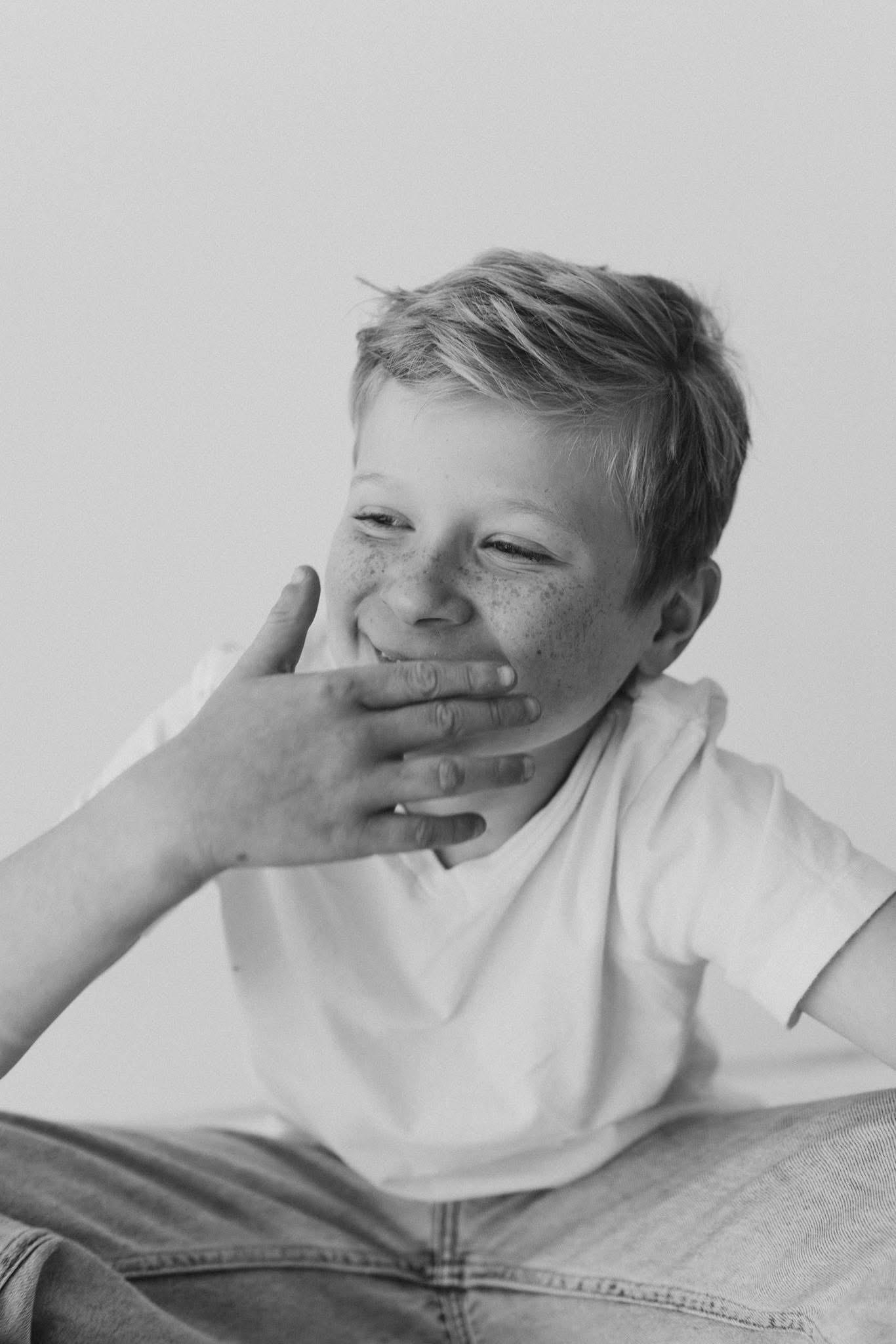
That wonderful kiddo is going to do amazing things, you just watch.
And what a unique and true gift he is to this world! Thank you for sharing this heartwarming story ❤️